News Story
Dissertation Introduces AI-Powered Hybrid Model for HVAC Systems

For his Ph.D. dissertation, Po-Ching Hsu combined machine learning with physics-based modeling to improve the efficiency of variable refrigerant flow systems.
Congratulations to Po-Ching Hsu on successfully defending his Ph.D. dissertation, “Experimental Investigation and Data-Driven Modeling for Variable Refrigerant Systems.”
Hsu’s research focused on variable refrigerant flow (VRF) systems – complex HVAC configurations that can deliver high energy efficiency by using multiple indoor units for zone-specific temperature control. He investigated modeling methods to improve VRF efficiency and enhance real-time control.
For his dissertation, Hsu developed a hybrid model that combines physics-based modeling with machine learning. The hybrid approach delivered higher predictive accuracy than either method alone, helping a system operate more efficiently by better matching heating and cooling supply with demand.
Hsu conducted his research through CEEE’s Consortium for Energy Efficiency and Heat Pumps (EEHP), under the guidance of EEHP Director and Research Professor Yunho Hwang. Next, Hsu will join Solstice Advanced Materials in Buffalo, New York, as an R&D engineer.
“My time at CEEE provided me with the opportunity to work on impactful research in HVAC and energy systems, while building strong skills in both experimentation and modeling,” Hsu says. “I am especially grateful for the supportive and collaborative environment, which encouraged me to explore new ideas and grow as an independent researcher. This experience has played a key role in preparing me for my next step in industry.”
A searchable listing of CEEE theses and dissertations published 2003–2026 is available online.
Published May 18, 2026
Related Stories
Stories / March 18, 2026
AI-Powered Hybrid Model Could Boost HVAC Efficiency

Stories / August 19, 2026
UMD Develops ML Tool to Predict Uneven Airflow in AC Systems

Stories / March 13, 2026
UMD-Developed AI Tool Advances Building Decarbonization and...

Stories / July 24, 2025
UMD Study Compares AI Models for HVAC Systems, Highlighting...
Stories / November 5, 2024
CEEE Study Explores How AI Can Reduce HVAC Energy Consumption
Stories / October 21, 2024
Jump Start Program Gives CEEE Grad Students a Boost
Stories / April 18, 2024
Andrew Fix Joins CEEE Research Team
Stories / April 12, 2024
CEEE Researcher Named Finalist in UMD’s 3MT Competition
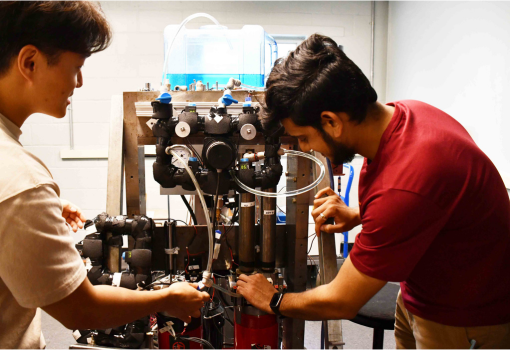
Stories / June 3, 2020
UMD receives two new DOE Building Technologies awards
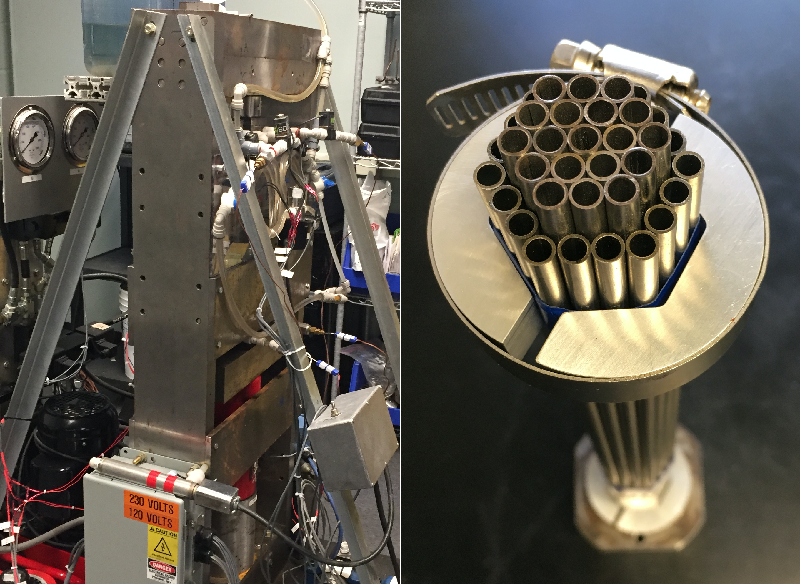
Stories / Sep 22, 2026
Two Years Running, Maryland #12 Among Publics for Undergrad...

Stories / Sep 4, 2026
Md Nasim Mia Receives Graduate Endowed Fellowship

Stories / Aug 26, 2026
Graham Named Honorary ASME Member

Stories / Aug 24, 2026
UMD Hosts Teachers for a Summer of Sustainable Cooling Research

Stories / Aug 19, 2026
UMD Develops ML Tool to Predict Uneven Airflow in AC Systems

Stories / Aug 11, 2026
Terp Travel: Students Collaborate on Sustainable Energy...

Stories / Jul 31, 2026
CEEE Director Vikrant Aute Receives Distinguished Service Award

Stories / Jul 27, 2026
Dissertation Advances Elastocaloric Cooling Toward...

Stories / Jul 24, 2026
Dissertation Introduces Advanced Modeling Methods to Improve...

Stories / Jun 25, 2026
UMD Design Could Boost Cold-Climate Heat Pump Performance
